
24/7 service · Free inspection

16062
Toshiba ServiceEGYPT SERVICE CENTER
Services

Toshiba Water Heater Repair — Safety First, Every Visit

Is your Toshiba water heater not heating, leaking, or failing to ignite? Call 16062 — our 24/7 hotline. A water heater is no ordinary appliance: electricity, water, pressure and sometimes gas in one unit. That's why every visit ends with a mandatory safety check (safety valve + leak test + earthing) before our technician leaves. Free inspection, genuine parts, and a written 6-month warranty, in all governorates.

We repair: electric heaters of all capacities · gas heaters — with a mandatory safety check every visit.

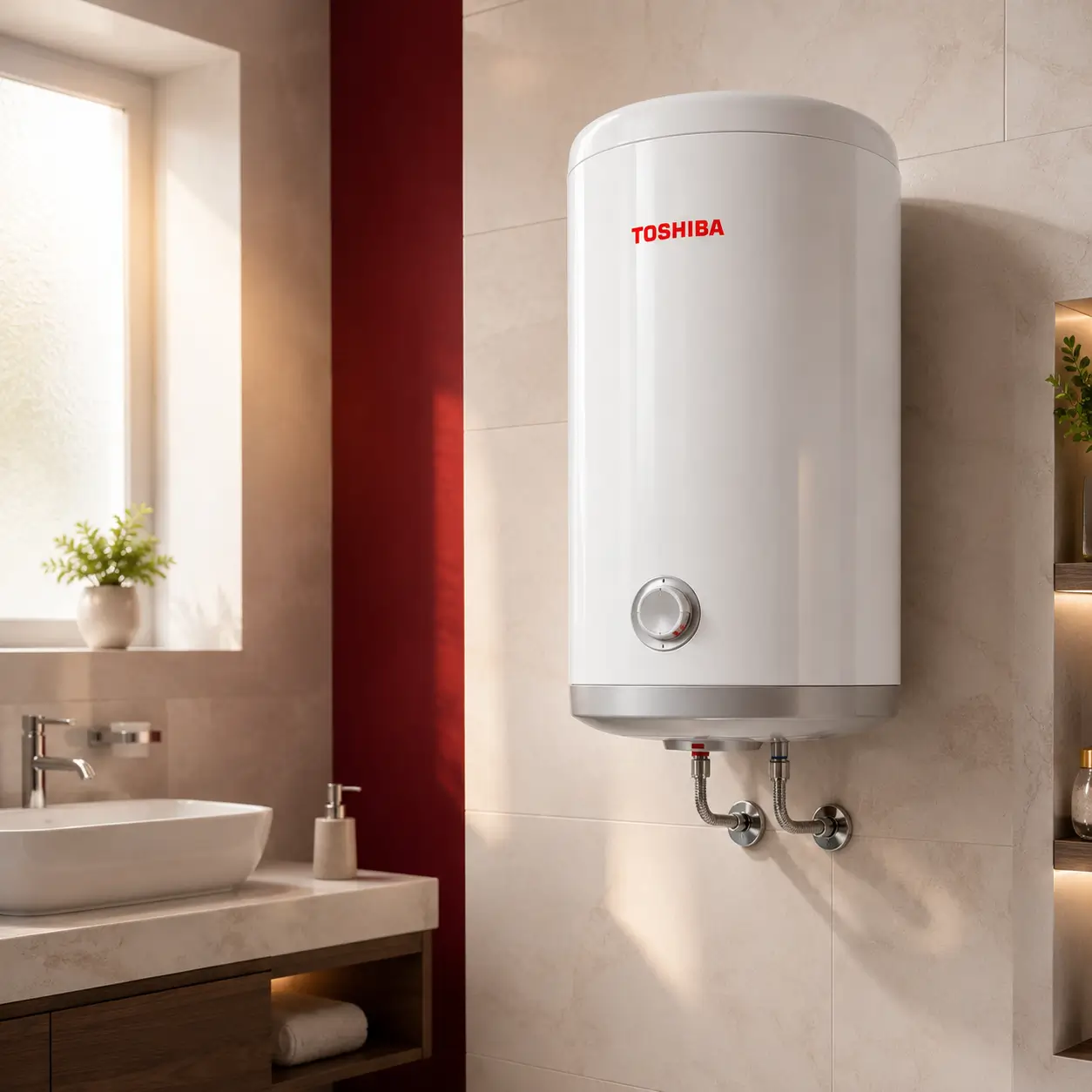
Toshiba electric and gas water heater repairTOSHIBA

⚠️ Smell gas near the heater? Do this in order, immediately: (1) Close the gas valve or cylinder now. (2) Open windows and doors wide. (3) Absolutely no lighter, cigarette, or even flipping any electrical switch on OR off — a tiny spark is enough. (4) Leave the area and call us from outside on 16062. For electric heaters: if it gives shocks or smells of burning — cut it from the main breaker (not the plug with a wet hand) and call immediately.

Most Common Toshiba Water Heater Faults: Symptoms, Causes & What You Can Try

Our standard method: causes ordered from most to least common, one safe step to try yourself, and when a technician is genuinely needed. With heaters specifically: anything deeper than what is listed here means a technician — electricity, water and pressure are no field for experiments.

No hot water at all (electric heater)

Causes

a burnt heating element — the single most common fault, usually killed by scale build-up; the safety thermostat has tripped; a failed operating thermostat; or an electrical issue (breaker/socket/cable).

Try safely

confirm the lamp lights and the breaker is up, and if your model has a reset button press it once only — if it trips again, a real fault is tripping it, so never keep pressing. Element and thermostat are replaced in a single visit with genuine parts.
Weak heat, or hot water running out fast

Causes

a thick limescale layer insulating the element from the water (Egypt's water is hard and scale builds fast), a drifted thermostat, a leaking mixer blending cold into hot, or a tank simply too small for the household.

Try safely

raise the thermostat one step and try for a day — if improvement is weak, it's almost certainly scale needing professional cleaning with an element check, one of our most requested jobs, and it restores original efficiency.

Water leaking from the heater

Identify the source first, because the verdict differs completely: from pipe fittings = tightening or a washer, simple fix. Light dripping from the safety valve during heating = completely normal (water expands and the valve relieves excess pressure) — but continuous running means the valve or pressure needs checking. From the heater body itself = the most serious: usually rust in the inner tank, and we'll tell you straight — repairs don't last, replacement is safest.

Try safely

dry and identify the source only, and if it's from the body cut the power immediately and call — water and electricity share one device.

Gas heater: flame not igniting, or going out by itself

Causes

dead ignition batteries (the most common and simplest — replace them before worrying!), weak water pressure so the flow sensor doesn't trigger, a tired thermocouple (the safety sensor that shuts gas when the flame dies), or a valve/cylinder issue.

Try safely

change the batteries and try a stronger water flow. If the flame lights then dies in seconds, it's almost certainly the thermocouple — a critical safety part we replace genuine in one visit, and never bypass it.

Boiling or popping sounds from inside

This sound isn't normal and has one near-only cause: a scale layer in the tank bottom and on the element, with water boiling trapped underneath and popping. Beyond the noise, it raises electricity use and shortens the life of the element and tank.

Try safely

there is no home step here — the fix is professional tank and element cleaning (usually with a magnesium-anode check — see its section below). The earlier it's done, the more you save.

Heater trips the breaker

The most likely cause: the element has failed and leaks current into the water or body, so the breaker (especially an earth-leakage/differential one) cuts off to protect you — meaning the breaker is doing its job. Other causes: a damaged wire or connection, moisture in the terminal box, a failed thermostat.

Try safely

never force the breaker back on repeatedly — that trip is protection against electricity in the water. Disconnect the heater and call 16062; replacing the element usually fixes it at the root.

The Mandatory Safety Check — Why Every Heater Visit Ends With It

The water heater is the only home appliance combining electricity, water and pressure — and with gas models, fire too. So we have a fixed rule: no technician packs up and leaves a heater visit — whatever its reason — before completing this check in full:

  • Safety valve: we test that it genuinely relieves excess pressure — a blocked or scaled valve is a real danger to the tank.
  • Gas leak test with foam on every joint (gas heaters) + confirming adequate ventilation at the installation spot.
  • Earthing and electrical connections check (electric heaters) — so any future current leak trips the breaker instead of reaching you.
  • Setting the thermostat to a safe, economical temperature and verifying the secondary safety thermostat works.

This check is free within any visit — our reputation is worth more than any profit, and a safe heater means a customer who recommends us to the neighbors.

We Repair Every Toshiba Water Heater Type

  • Electric heaters of all capacities: from compact kitchen units to large bathroom tanks — elements, thermostats, valves and descaling.
  • Gas heaters: ignition, thermocouple, flow sensor and gas regulator — with a mandatory leak test after any repair.
  • Digital models with electronic control panels — board and sensor diagnosis and repair.
  • Old and discontinued models: genuine and approved-compatible parts in stock.

The Long-Life Secret: Scale and the Magnesium Anode

A fact most people don't know: inside an electric heater there's a magnesium rod (the anode) whose job is to sacrifice itself — rust and corrosion attack it instead of the tank wall. It erodes over time, and if it's consumed without replacement, rust starts on the tank itself — and then there is no repair. With hard water across most of Egypt, limescale also builds on the element, cutting efficiency and raising bills. The practical takeaway: periodic tank-and-element cleaning + checking and replacing the magnesium anode when needed = a heater that lives years longer at its original efficiency. Ask for 'preventive heater maintenance' on 16062 — far cheaper than a new heater.

How Our Heater Service Works

  1. 1

    Call 16062 and mention the heater type (electric/gas) and the fault — and if there's a gas smell or electric shock, say so immediately and we'll walk you through safety steps on the call.

  2. 2

    Earliest slot in your area — with emergency priority for hazardous gas and electricity cases.

  3. 3

    Full check-up and a final price announced before any work — free inspection, your decision.

  4. 4

    Repair with genuine parts in front of you + the full mandatory safety check before leaving + invoice and written 6-month warranty.

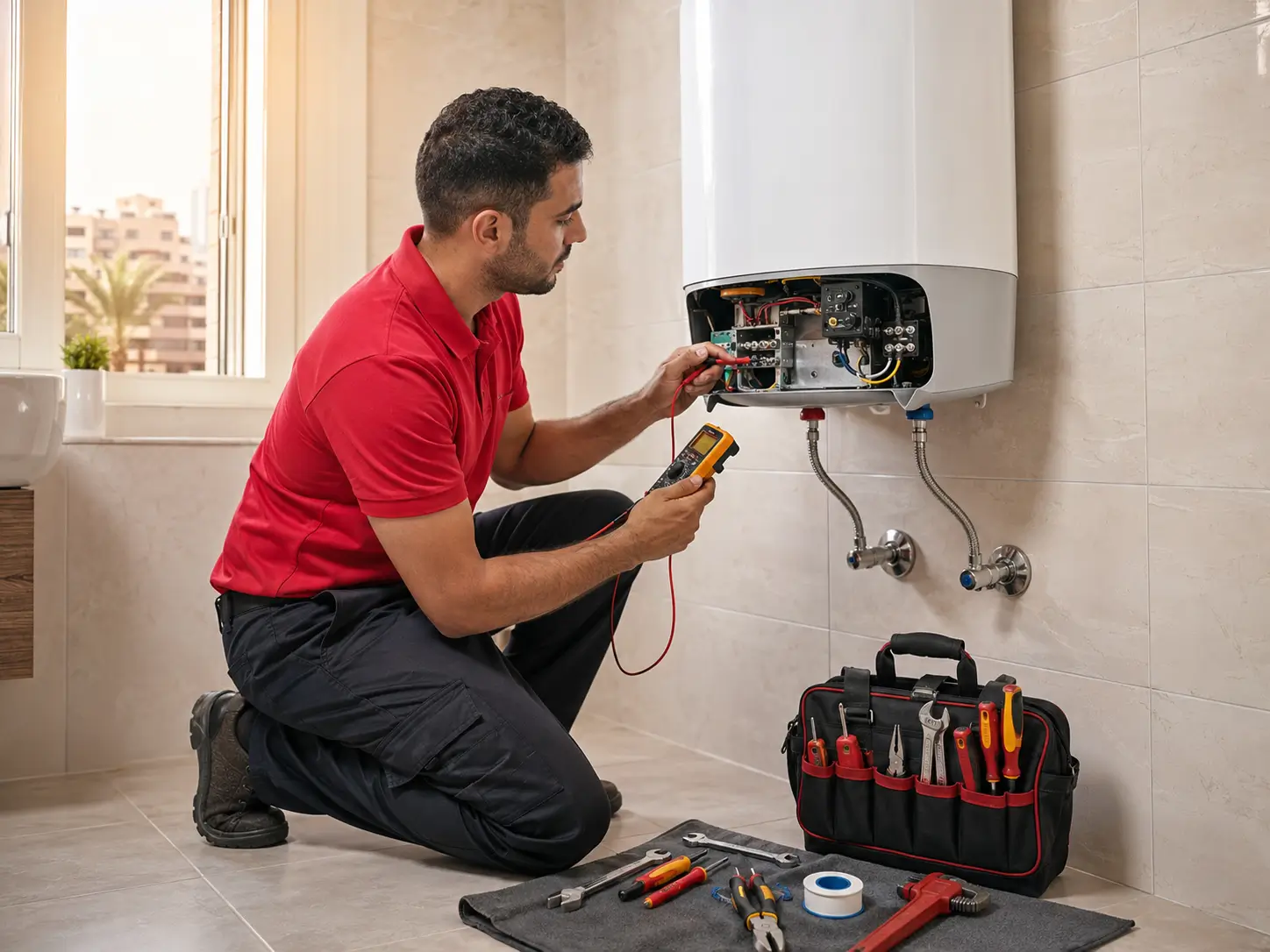
Specialist technician servicing a Toshiba water heater

Genuine Toshiba Water Heater Spare Parts

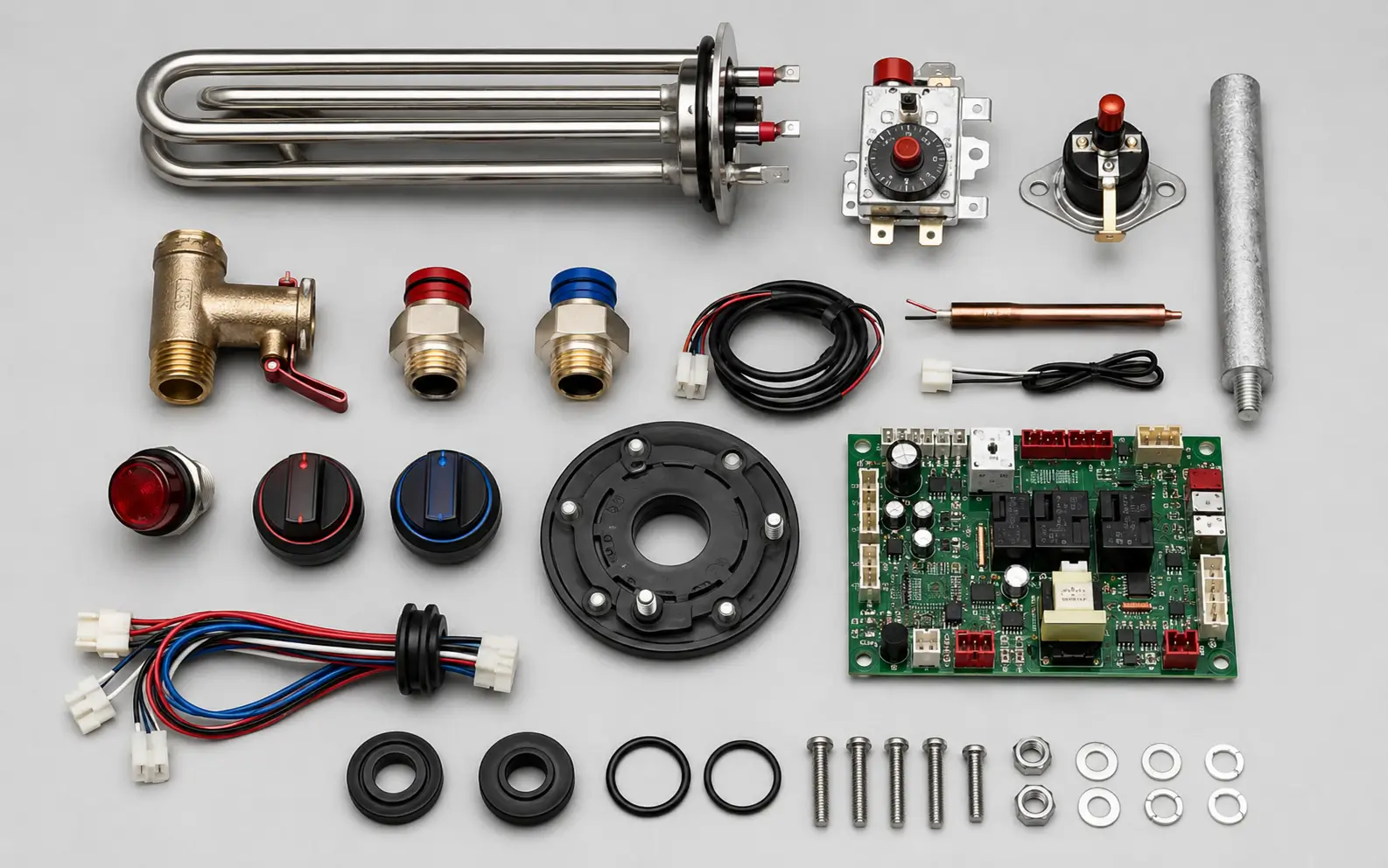
Genuine Toshiba water heater spare parts

Permanent stock of the most-needed heater parts. The genuine part goes in while you watch, the old part goes to you, the invoice is itemized, and the 6-month warranty covers part and labor together.

Heating elements (all sizes)Operating & safety thermostatsSafety valvesMagnesium anodesGaskets & flangesGas ignition kitsThermocouplesFlow sensorsControl panels

5 Technician Tips That Extend Your Heater's Life

  1. 1Set the temperature to 55–60°C, not higher — fully sufficient, saves electricity, reduces scale, and is safer against scalding.
  2. 2The safety valve dripping lightly during heating? That's normal and its job — but never block or tie it: blocking traps pressure inside the tank, a real danger.
  3. 3Descale periodically (every 12–18 months depending on your water hardness) — it restores efficiency and saves more than it costs.
  4. 4Ask for a magnesium-anode check with any maintenance visit — the cheapest part in the heater protecting its most expensive one: the tank itself.
  5. 5Gas heaters need permanent ventilation where installed — never in a closed bathroom without an extractor or vent.

Toshiba Water Heater Repair in Every Governorate

Heater technicians across Cairo, Giza, Alexandria and all governorates — electric and gas, with emergency priority for gas and electrical hazards. Call 16062 with your area and heater type — and in winter we scale up the teams, because no home can do without its heater.

Toshiba Water Heater Repair FAQ

What is the Toshiba water heater service number?

16062, around the clock, for all governorates — with immediate emergency priority for hazardous gas and electricity cases. You can also WhatsApp the model and fault to 01050887010 for a free initial diagnosis.

My heater drips water from underneath — is that dangerous?

Identify the source: light dripping from the safety valve during heating is completely normal (never block it). Continuous leaking from fittings needs tightening; leaking from the heater body itself signals tank rust — cut the power and call immediately, and we'll tell you honestly if replacement is safer than repair.

How often should I descale the heater?

With Egypt's hard water: every 12–18 months for normal use. The signs you're late: boiling and popping sounds, slower heating, and a higher electricity bill. Periodic descaling with an anode check adds years to the heater's life.

I smell gas — what do I do?

Close the gas valve immediately, open the windows, light nothing and touch no electrical switches, leave the area and call us from outside on 16062 — gas cases get immediate emergency priority.

How much does a Toshiba heater repair cost?

It depends on the fault: inspection is always free, and the final price is announced before any work — and if the fault is unrepairable tank rust, we'll say plainly that replacement is cheaper and safer. No call-out fees, no surprises.

Do you replace elements and thermostats at home?

Yes — element, thermostat, safety valve, magnesium anode and descaling, all in a single home visit with genuine parts, always ending with the full mandatory safety check before the technician leaves.

Your Heater Is Your Home's Safety — Trust a Specialist

A device combining electricity, water and pressure deserves no half-skilled hands. One call, a free inspection, a Toshiba heater specialist, and a full safety check before he leaves.

Electric & gas — mandatory safety check every visit — free inspection — genuine parts — written 6-month warranty.